Image by kjpargeter on Freepik
The knee is a complicated joint and, unfortunately, is vulnerable to a range of pains and injuries. This article explains a little more about the joint, the kind of things that can go wrong and how physiotherapy can help.
The knee is known as a ‘hinge joint’ having only two directional movements, flexion and extension. It is composed of multiple soft tissue structures which add support to the joint itself in order to maintain its integrity and stability from sideways movement, or excess movement beyond the joints normal range.
As a large load bearing joint, our knees have to withstand incredible forces in order to be able to maintain our body weight upright against gravity, allowing us to walk distances, perform sporting activities, climb stairs or hills, or even just stand up from a chair.
Knee joint symptoms can comprise of pain, swelling and or crepitus (audible grinding or clicking sounds).
Knees may also feel unstable or vulnerable in certain positions or during functional activities such as descending stairs or walking on uneven ground.
When symptoms arise in the knee following trauma or insidiously physiotherapy can help with management of those symptoms, education regarding the meaning of those symptoms and of course strengthening of the muscles around the knee.
Proprioception, which is our awareness of our body parts in space, is another key factor of joint stability and balance and physiotherapy can help to improve our balance and control of our joints. This is important when standing or walking on uneven or moving surfaces such as standing on a moving bus, or walking across a field.
Common injuries include:
Common pathologies (a pathology is a departure or deviation from a normal condition)
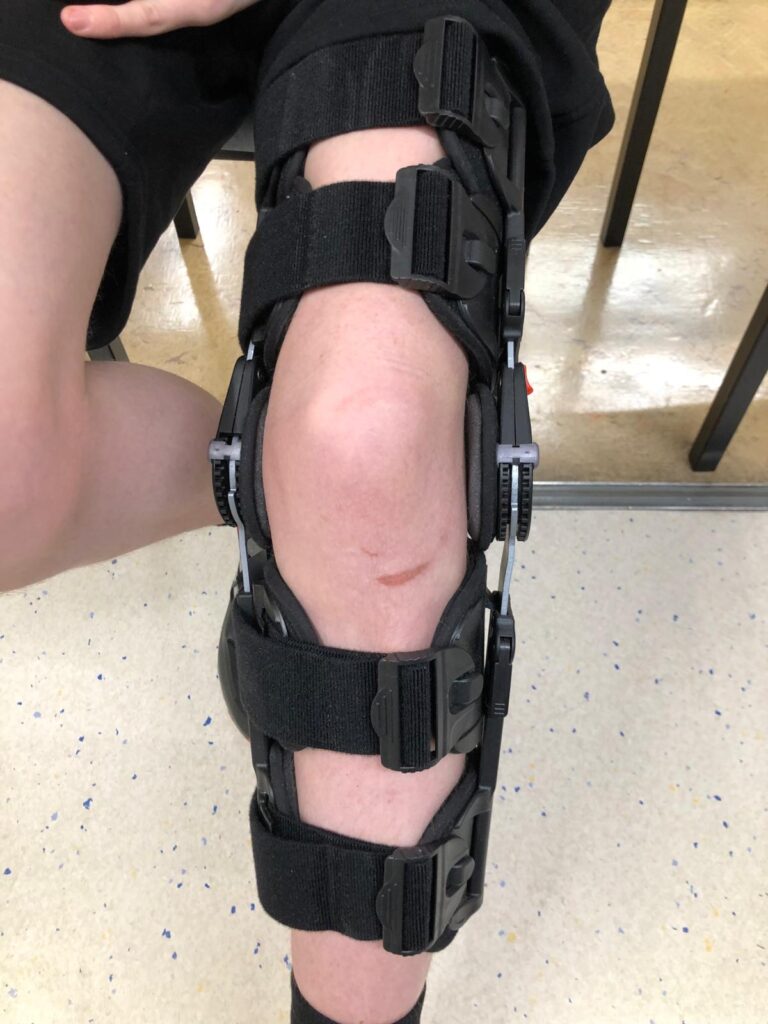
Not all injuries are as severe as the one pictured below (a dislocated patella) but the principles used for rehab are often very similar and the videos here and here show dynamic balance work on a small trampoline to regain the joint's natural proprioceptive response giving confidence to the patient as they resume physical activity.
If you are experiencing any knee problems whether following a specific trauma or known injury, or an onset of pain or swelling then we are here to help. Please ask to speak to one of our qualified physiotherapists if you are unsure about what appointment you require and we can get you booked in and on the road to recovery as soon as possible!